
The three previous posts on this blog were originally designed to represent a cohesive discussion of the different ways developers can use videogames to convey a story to the audience, however due to some extra time I have decided to add at least one side point to discuss the relationship between narrative and play. This post will focus on narrative made largely through player choice in a situation where said story is not intentionally provided by developers.
Let’s start with a personal example of self made story within a story based game. I remember when Elden Ring first released, I showed up to a class and chatted with a friend, and the game came up. However, what I found interesting is we both told stories about the vastly different journeys we had both been on within the game, as if we were describing completely different stories. Due to our ability to both build very different characters, and our ability to explore the world in our own way led to entirely different narratives.
Now, we were both bound by the main story of Elden Ring to some extent. On one level, we were both encouraged to focus on the main story, so our narratives had clear crossovers, and on another level we both started in the same area of the same world, so at the very least our settings were the same. It is very rare for a game to overcome this.
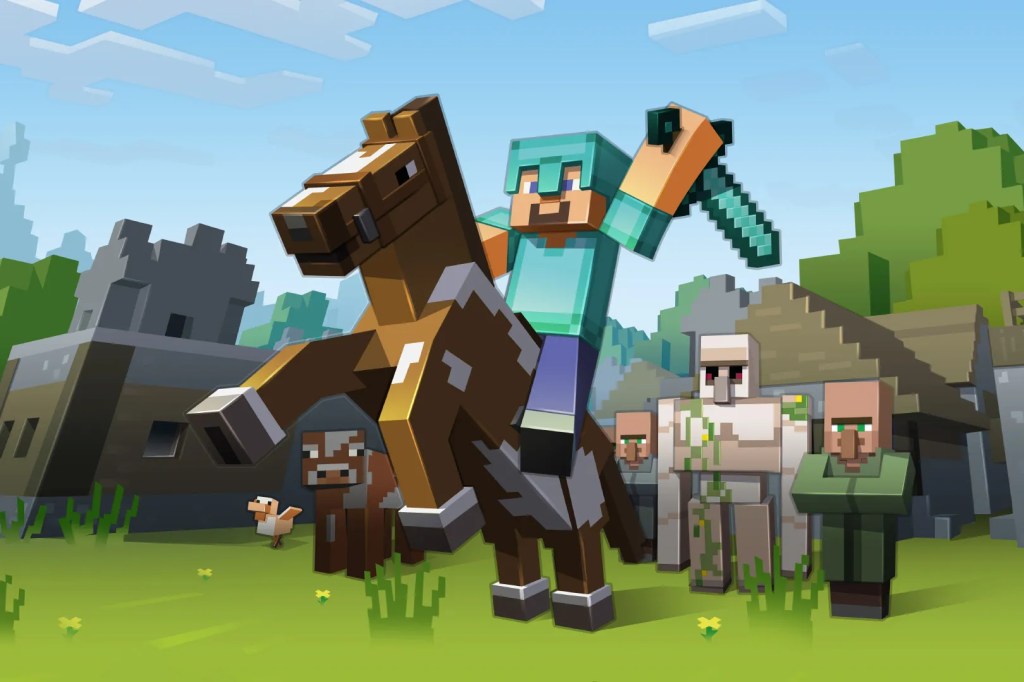
One example of a game that takes a step further away from providing any narrative is Minecraft. The game puts the player in a randomly generated world and gives them no story or incentive through quests, meaning that players are free to do what they please within the sandbox. There is always bound to be crossover when players discuss unique experience with Minecraft, as doing specific notable tasks like exploring “the Nether”, a sort of hell dimension, create clear points of comparison. The game also plays the end credits after defeating “the Ender Dragon”, which implies an end to the story (it is worth noting that Minecraft does not stop you from playing after doing so). That said, the game once again leads to entirely unique stories between players, as the game is randomly generated (and lacking in incentive) enough for every playthrough to be different. While this storytelling does not allow for as much creator control over theme, it instead gives it to players who, likely without realising, craft a more personal story.
 Heryland
Leave a comment